

A message queue promises to deliver messages, but the promise has terms — at-least-once, at-most-once, ordering, and retries — and…
Read More »System Design

Splitting a system into services makes boundaries expensive to change. Getting them wrong produces a distributed monolith that is harder…
Read More »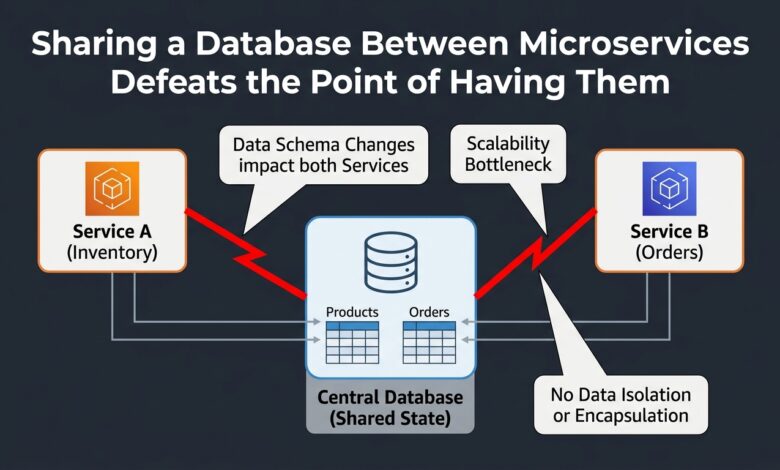
Splitting a monolith into separate deployable services while leaving them all reading and writing the same database preserves every coupling…
Read More »
A load balancer does more than spread traffic — it is the mechanism for handling failures and for managing state,…
Read More »
A dependency that is struggling under load gets a flood of retries from every caller treating each failure as transient,…
Read More »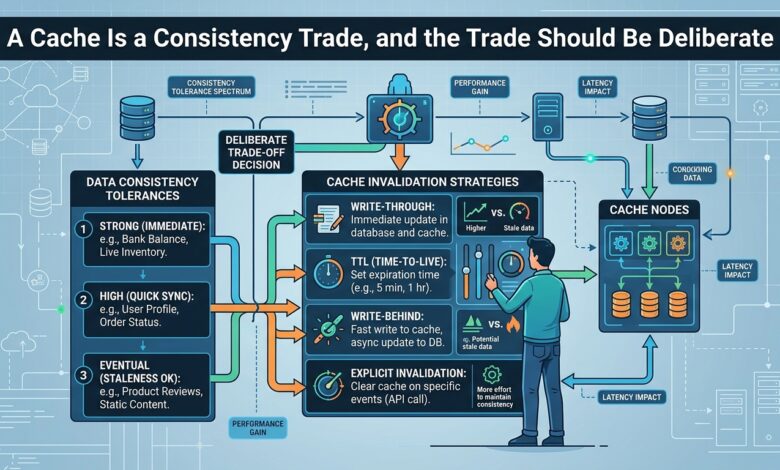
Caching improves performance by serving stale data, and the trade-off between freshness and speed should be a deliberate decision, not…
Read More »
Event sourcing stores the history of changes rather than the current state, which gives a complete audit trail and the…
Read More »
Adding a queue between a fast producer and a slow consumer feels like it solved the throughput mismatch. Without backpressure,…
Read More »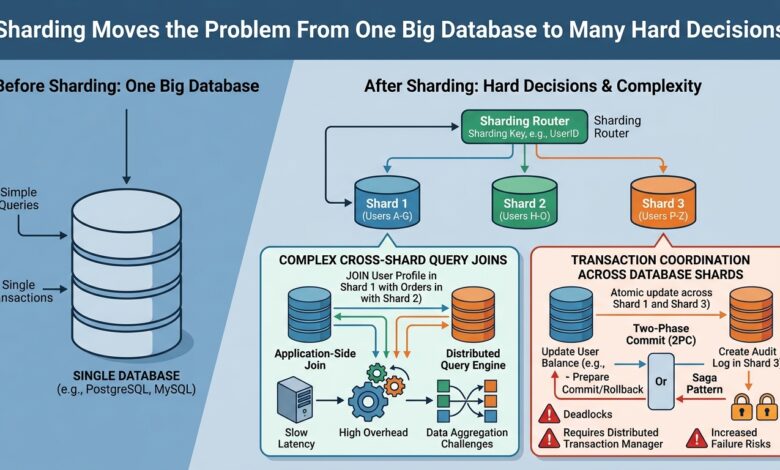
Sharding spreads data across many databases to scale, but it moves the problem from one big database to a set…
Read More »
Networks fail after the request arrives but before the response returns. Without idempotency, your retry logic is a duplicate-charge generator.
Read More »